
Many adults think about straightening their teeth at some point, often after noticing small changes over time. Teeth can shift gradually, even years after earlier orthodontic treatment, or you may have always been aware of alignment concerns but never felt it was the right time to address them.
For patients in Possilpark, Invisalign is often one of the options that comes up during this stage of consideration. Its discreet appearance and flexibility make it appealing, particularly for those balancing work, family life, and other commitments.
At the same time, it’s natural to wonder what day-to-day life with aligners actually feels like. Understanding how Invisalign fits into a normal routine can help you decide whether it’s something that would work for you.
What Is Invisalign?
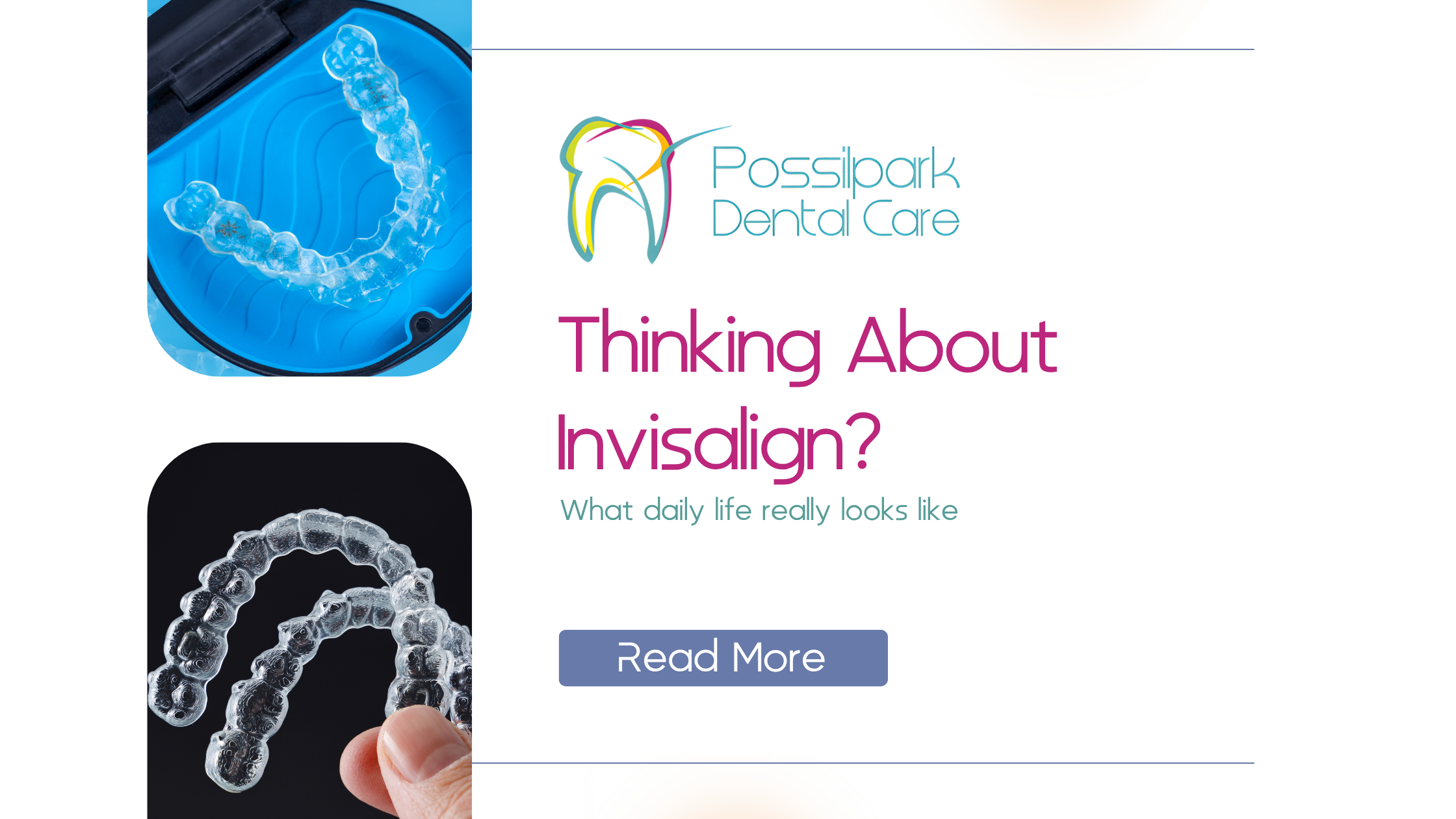
Invisalign is a system of clear, removable aligners designed to gradually move teeth into a more aligned position over time.
Each aligner is custom-made to fit your teeth and is worn for most of the day before being replaced with the next in the series. The changes are gradual and carefully planned, allowing teeth to move in small, controlled steps.
Because the aligners are transparent, they are often less noticeable than traditional braces.
Why Many Adults Consider Invisalign
For adults, the decision to explore orthodontic treatment is often influenced by lifestyle as much as appearance.
Invisalign is commonly considered because:
- The aligners are discreet and less noticeable
- They can be removed when needed
- Treatment fits around daily routines
- There is no need for fixed brackets or wires
However, it still requires consistency and commitment, which is an important part of deciding whether it is the right option.
What Does Day-to-Day Life with Invisalign Feel Like?
One of the most common questions is how Invisalign fits into everyday life.
For most people, wearing aligners becomes part of their routine quite quickly. The aligners are typically worn for the majority of the day, and removed only for eating, drinking anything other than water, and cleaning teeth.
There may be a short adjustment period at the beginning, where the aligners feel unfamiliar. This usually settles as you get used to wearing them.
Eating and Drinking with Aligners
Invisalign does require some small changes to eating habits, but these are generally manageable.
Aligners need to be removed before meals, which means:
- You can eat normally without restrictions on food types
- There is no risk of food getting trapped around brackets
- You’ll need to clean your teeth before putting aligners back in
Drinks other than water are usually avoided while wearing aligners to prevent staining or damage.
Cleaning and Maintenance
Keeping both your teeth and aligners clean is an important part of the process.
This involves maintaining regular brushing and cleaning the aligners gently to keep them clear and comfortable to wear. Most patients find that this becomes part of their routine without much difficulty.
Good oral hygiene also helps ensure that treatment progresses smoothly.
Does This Always Need Treatment?
No. Not all alignment concerns require treatment, especially if they are minor and not affecting oral health or function.
Some adults are comfortable with small irregularities and choose not to make any changes. Others may simply want reassurance about whether treatment would offer any real benefit.
A consultation helps clarify whether Invisalign is appropriate, but there is no expectation to proceed.
What Kind of Changes Can Invisalign Make?
Invisalign is suitable for a range of alignment concerns, depending on their complexity.
It may help with:
- Mild to moderate crowding
- Small gaps between teeth
- Teeth that have shifted over time
- General alignment improvements
More complex cases may require a different approach, which is why a personalised assessment is important.
What About Work and Social Life?
One of the reasons Invisalign appeals to adults is how it fits into professional and social situations.
Because the aligners are clear, they are often not noticeable in everyday interactions. They can also be removed briefly when needed, although consistency is important for progress.
Most people find that Invisalign does not significantly interfere with their routine once they adjust to wearing the aligners.
How Long Does Treatment Take?
Treatment time can vary depending on the individual and the complexity of the case.
Some treatments are relatively short, while others take longer to achieve the desired result. What matters most is that the process is gradual and carefully planned to ensure safe and predictable movement.
Regular reviews help track progress and make any necessary adjustments along the way.
Thinking Long Term
When considering Invisalign, it’s helpful to think about the long-term outcome as well as the day-to-day experience.
Some patients are focused on improving alignment for aesthetic reasons, while others are thinking about long-term maintenance and stability. Understanding your priorities can help guide whether Invisalign feels like the right fit.
A steady, considered approach often leads to results that feel both natural and sustainable.
Read our blog on Beyond Invisalign: The Complete Guide to Adult Smile Alignment
If You’d Like to Talk It Through in Possilpark
If you’re considering Invisalign and would like to understand how it might fit into your daily routine, a conversation can help clarify your options.
The team at Envisage Dentistry Possilpark can assess your teeth, explain what treatment would involve, and help you decide whether it’s something you’d like to explore further.
📞 0141 800 0630
📧 [email protected]
FAQs
Is Invisalign suitable for adults of any age?
Yes, many adults choose Invisalign. Suitability depends more on dental health than age.
Will people notice I’m wearing aligners?
They are designed to be discreet and are often not noticeable in everyday situations.
Do I have to wear them all day?
They are usually worn for most of the day, with short breaks for eating and cleaning.
What happens if I forget to wear them?
Occasional lapses happen, but consistent wear is important for treatment to progress as planned.